Plants
Planting under mature hardwoods
The canopy is the reason people buy houses here and the reason half the yard will not grow grass. Working with it rather than against it is the single biggest improvement available to most Sandy Springs properties.
Count the light before anything else
UGA Extension notes that turfgrasses need roughly four hours of full to filtered sun a day as a minimum. Its shade ratings put zoysiagrass at very good to good, tall fescue at good, centipedegrass at good to fair, hybrid bermudagrass at fair to poor and common bermudagrass at very poor, and a separate UGA bulletin describes zoysiagrass as the most shade tolerant and best warm-season grass to grow beneath mature trees, with cultivars holding acceptable quality down to about four to four and a half hours of filtered or intermittent sun.
Under a closed canopy of oak, hickory and tulip poplar in high summer, large parts of a Sandy Springs yard fall below that. Once the number is counted rather than guessed, the argument about the lawn ends. Under four hours it is a bed, and every year spent reseeding it is money spent on the wrong answer.
The other constraint is water, not light
A mature hardwood takes an enormous volume of water out of the top foot of soil, and the ground under an established oak is drier through an Atlanta August than open ground twenty feet away. That is why plants sold as shade tolerant sometimes fail under a big tree: they tolerate the light and not the dry. A plan for this situation weights toward species that handle dry shade, and it accepts that the first two seasons need supplementary water even though the site is shaded.
Watering that new planting is legal outside the normal hours. Georgia limits outdoor irrigation to between 4 p.m. and 10 a.m., but the statute exempts irrigation of new and replanted plant, seed or turf during installation and for 30 days immediately after. Hand watering with an automatic cutoff or a handheld container, and drip irrigation and soaker hoses, are exempt from the time limitation entirely.
Three things that kill the tree
- Adding grade. Bringing in topsoil to build a bed over a root zone cuts oxygen to the roots and buries the root flare. The tree declines slowly enough that nobody connects it to the bed four years later. Do not raise grade under a tree you intend to keep.
- Tilling. The feeder roots are in the top foot, spreading well beyond the drip line. Running a tiller through them to improve the soil trades the tree for the bed.
- Compacting. Machine traffic, stacked material and a compacted patio base over a root zone all do the same thing. Soil under a canopy should be protected during construction, not used as a staging area.
How a woodland bed gets built
- Kill or remove what is there. Failing turf and ivy both come out first. Sheet mulching works where time allows.
- Set the bed line at the real canopy line. Not at an arbitrary curve. The edge should follow where the light changes, which is usually further out than people draw it.
- Plant into the existing soil. Work between the surface roots. Small pockets of amendment at each planting hole, not a blanket of new soil.
- Use smaller stock. A one gallon plant establishes in a root-competitive site far better than a three gallon plant does, and it costs less.
- Mulch lightly and keep it off the trunk. A couple of inches, not a volcano. Mulch piled against bark holds moisture where the tree does not want it.
- Water through establishment. Two seasons, not two months, because the tree is competing for every drop.
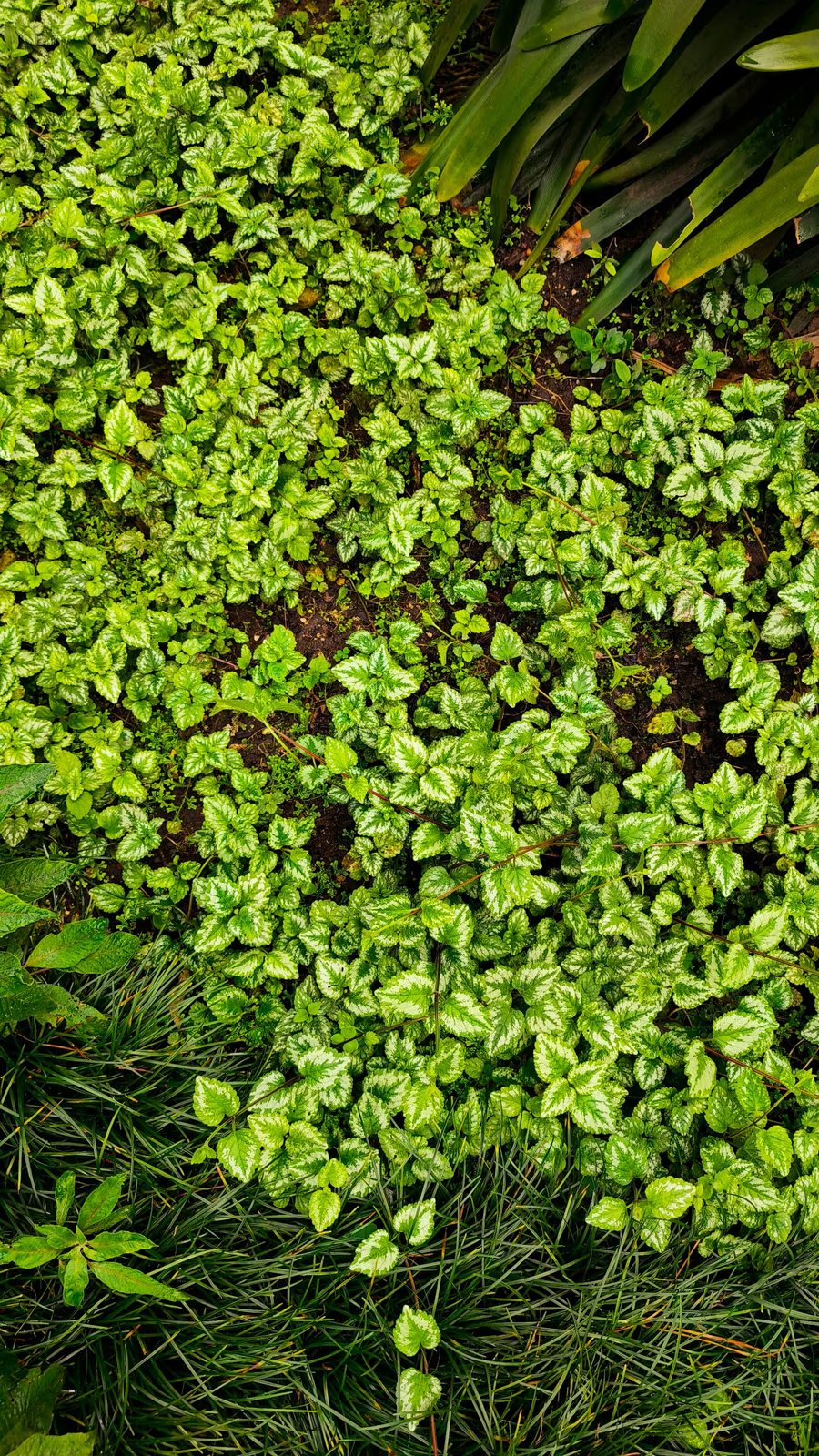
English ivy
The City of Sandy Springs runs a public campaign on this. It describes English ivy, Hedera helix, as an invasive non-native species that can displace native plants, threaten tree health and negatively impact the environment, and notes that property owners are responsible for the health and maintenance of trees on their property. The city's Tree Fund also supports removal of invasive non-natives including kudzu, privet and English ivy on public property, with mechanical removal preferred over chemical treatment.
On a private lot the practical case is simpler still. Ivy climbing a trunk adds weight and sail area to a canopy that has to stand up to summer storms, and it hides defects in the bark from anyone looking the tree over. Cutting the vines at the base and again at chest height, then clearing the ground layer, is usually stage one of a shade planting project. It is slow work and it does not photograph well, and it is the part with the highest return.
What to plant
The palette that works here is a Piedmont woodland palette: shade-tolerant shrubs, ferns and groundcovers, weighted toward natives on a property near a creek, where a naturalistic planting looks right and does useful work holding the ground. UGA Extension publishes a water-wise landscape guide specific to the Georgia Piedmont, which is the right reference for species choice, and a soil test through the county extension office is worth doing first because Piedmont soils tend acidic and that suits a large part of the woodland palette well.
If a lawn is wanted at the margins of the canopy, zoysiagrass is the species to argue for, and the grass selection guide covers the trade.
Deciding whether a struggling tree stays
This comes up on most shade planting projects, because the tree that is thinning is usually the one casting the shade the design is being built around. It is worth getting a certified arborist to look before the decision is made rather than after. Thinning alone is not a verdict: drought years, root damage from old work and ivy load all produce a canopy that looks poor and recovers. What an arborist is reading instead is structure and decay, and that is the difference between designing around a tree with thirty years left and planting a bed under one that has three.
Sources
UGA Extension Bulletin 1533-1 for shade ratings and the four-hour minimum, and Bulletin 1590 on trees and lawns for zoysiagrass under mature trees. UGA Extension Bulletin 1444, the water-wise landscape guide for the Georgia Piedmont. City of Sandy Springs Yard Maintenance and Tree Removal and Tree Fund pages for English ivy and invasive species. O.C.G.A. 12-5-7 for the watering schedule and its exemptions.